Share/Bookmark

Showing posts with label Leonardo da Vinci. Show all posts

1/28/2010

Falsely Attributed Leonard da Vinci Fetches $1.5 Million

Top ART News Headlines for Thursday, January 28, 2010

La Belle Ferronniere, Leonardo da Vinci
La Belle Ferronniere was once attributed to Leonardo da Vinci (1452-1519); the artist is currently listed as unknown.
Leonardo Pronounced as Fake Fetches $1.5 Million | NEW YORK — Even if for a little while, merely brushing elbows with an Old Master evidently has some value. The "after" Leonardo da Vinci painting known as La Belle Ferronniere sold for $1.5 million on Thursday, exceeding Sotheby's pre-auction estimates of $300,000-$500,000. The portrait was once thought to be a da Vinci and became the subject of a scandalous 1929 trial over attribution. In 1993, a da Vinci specialist ultimately ruled that the oil painting was executed in the mid-17th century, well after the master's death. [Source: AFP]

Seven-Year-Old Prodigy May Be the Next Picasso |  ENGLAND — Kieron Williamson has a waiting list of hundreds requesting commissions, he recently sold 16 paintings for $29,280 in 14 minutes -- and he's only seven-years-old! The boy from Holt, a small town in England, works in pastels, watercolors and oils to create paintings inspired by the local landscape. Williamson's artistic talents are already being compared to those of Pablo Picasso, who was himself recognized as a child prodigy. [Source: Reuters]

Roger Rucha, Queen Elizabeth II, Jelly Belly jelly beans
Candy shop co-owner Nick Adlam poses with a portrait of the Queen made from over 10,000 jelly beans. [Credit: Times Online]
Sweet Portrait of the Queen | ENGLAND — A sweet portrait of Queen Elizabeth II has gone on display at Fizziwigg's candy shop in East Sussex, England. San Fransisco-based artist Roger Rucha created the 4-foot-high mosaic entirely out of Jelly Belly jelly beans - over 10,000 of them. In 2008, the artist gave George Clooney the Jelly Belly "treat"ment; the portrait of the actor was later auctioned off for charity. [Source: The Press Association]
______
Share/Save/Bookmark

1/25/2010

Mona Lisa is Da Vinci's Self-Portrait, Says New Scientific Theory

Pablo Picasso, Metropolitan Museum of Art, The Actor
Researchers plan to exhume the body of Leonardo da Vinci (1452-1519); the artist is thought to be buried in the Chapel of Saint-Hubert at the royal Château at Amboise in France's Loire Valley.
LOIRE VALLEY, FRANCE — In this week's Mona Lisa news comes a story that even The Da Vinci Code author Dan Brown would probably find far-fetched. Researchers from Italy's National Committee for Cultural Heritage have asked permission to exhume the remains of Leonardo da Vinci (1452-1519) from his tomb in the Chapel of Saint-Hubert at the royal Château at Amboise in France's Loire Valley. The scientists believe that the Mona Lisa may actually be Leonardo da Vinci in disguise. The theory: if researchers can locate the artist's skull and use it to reconstruct his face, they may finally be able to identify the famous "lady".

“If we manage to find his skull, we could rebuild Leonardo’s face and compare it with the Mona Lisa,” said Giorgio Gruppioni, an anthropologist from the committee.

Some scholars believe that the artist's presumed homosexuality and love of riddles led him to paint himself as a woman. But not all historians are so enthused by the plan.  

Nicholas Turner, a former curator of drawings at the Getty Museum, told the press, "It sounds a bit fanciful, slightly mad, as if the Leonardo bug has taken hold too firmly in the minds of these people. We know Mona Lisa was a specific person, she existed and it's her portrait," he said. "If Leonardo heard about all this, he would have a good chuckle."

The project could receive formal approval by summer 2010.
______
Share/Save/Bookmark

1/15/2010

Mona Lisa's High Cholesterol and Other Masterpieces Diagnosed

Leonardo da Vinci, Mona Lisa
Professor Vito Franco studied 100 famous artworks for evidence of disease; he says Mona Lisa exhibits clear signs of  xanthelasma (a cholesterol deposit) in the hollow of her left eye and lipoma (a fatty tissue tumor) on her right hand.
FLORENCE — The Mona Lisa and the new McDonald's in the Louvre's underground mall may have more of a connection than meets the eye. Vito Franco, a professor of Pathological Anatomy at the University of Palermo, believes Leonardo da Vinci's smiling model exhibits telltale signs of high cholesterol. More specifically, the Italian medical expert says the famous lady shows symptoms of a cholesterol deposit in the hollow of her left eye (called xanthelasma) and a fatty tissue tumor on her right hand (known as lipoma).

Professor Franco says he spent about two years analyzing roughly 100 works of art for evidence of disease and illness. He studied masterpieces ranging from Egyptian sculpture to contemporary paintings, with his concentration mainly on Renaissance pieces like the Mona Lisa.

“I look at art with a different eye from an art expert, much as a mathematician listens to music in a different way from a music critic,” Franco told The Times. He presented his findings of afflictions in the various artworks at a recent medical conference in Florence.
 
Additional diagnoses: in Diego Velázquez's Las Meninas, the Spanish child Margarita likely suffered from both a thyroid condition known as goiter and the genetic disorder linked to premature puberty, McCune-Albright syndrome; the unusually long, thin fingers of the young nobleman in Sandro Botticelli's Portrait of a Young Man indicates that the subject suffered from Marfan syndrome, a genetic disorder of the connective tissue; and the swollen knees of Michelangelo, as depicted in the foreground of Raphael's The School of Athens, were likely caused by kidney stones.
_____

Share/Save/Bookmark

12/05/2009

Top ART News: Week In Review | Nov. 29 - Dec. 6

A Day Without Art, World AIDS Day
■ A Day With(out) Art | World AIDS Day 2009 | NEW YORK (11/29/09) — Tuesday, December 1 is World AIDS Day, dedicated to raising awareness of the AIDS pandemic caused by the spread of HIV infection. The theme for 2009 is "Universal Access and Human Rights" and people everywhere will be wearing red to show their support. Raising money, increasing awareness, fighting prejudice, and improving education are just some of the ways to observe the day; those in the art community will honor the annual A Day With(out) Art. More >

Victoria and Albert Museum, medieval, renaissance, art galleries■ Medieval Times and Renaissance at a London Museum | LONDON (12/2/09) — A major unveiling took place in London on Wednesday as the Victoria and Albert Museum opened its doors to a new $53 million wing of remarkable treasures. Ten new galleries at the V&A feature more than 1,800 objects spanning the Middle Ages to the Renaissance eras. One of the collection highlights is five of Leonardo da Vinci's small notebooks (1487-1505) on permanent display for the first time. More >

Art Basel Miami Beach
■ Art Basel Miami Beach: Comfy Shoes Required | MIAMI BEACH (12/3/09) — An estimated 40,000 art enthusiasts, art collectors, artists, dealers, curators and critics will attend the eighth annual Art Basel Miami Beach, America's preeminent contemporary art fair. From December 3-6, the fair, held at Miami Beach Convention Center, will offer contemporary art and rare museum-caliber artworks. In the city known for its all-night parties, Art Basel Miami Beach always attracts its share of celebrities. So far, early sightings include Lenny Kravitz, Sylvester Stallone, Calvin Klein, Naomi Campbell and John McEnroe. More >

oil paintings, Overstock Art, Vincent van Gogh■ The Ten Most Popular Oil Paintings of 2009 | WICHITA, KS (12/5/09) — Quick! Think of an artist, any artist. Who did you think of? Pablo Picasso? Vincent van Gogh? Claude Monet? Many of you probably did. So it's not too surprising, then, that those three artists, along with Gustav Klimt, Pierre-Auguste Renoir, Georgia O'Keefe and Wassily Kandinsky, were all listed in Overstock Art's Top 10 Oil Paintings rankings for 2009. More >

■ Mysterious Letters: Art Project or Mail Fraud? | PITTSBURGH (12/5/09) — "We intend to write to everyone in the world..." say artists Lenka Clayton and Michael Crowe on their website, Mysterious Letters. Last week, 620 residents of the Polish Hill community in Pittsburgh, Pennsylvania received letters from Clayton and Crowe. But while some think the art project is an inspiration, others aren't so excited by it. More >
=========================
Share/Save/Bookmark

12/02/2009

Medieval Times and Renaissance at a London Museum

Victoria and Albert Museum, galleries

LONDON — A major unveiling took place in London on Wednesday as the Victoria and Albert Museum opened its doors to a new $53 million wing of remarkable treasures. Ten new galleries at the V&A feature more than 1,800 objects spanning the Middle Ages to the Renaissance eras. One of the collection highlights is five of Leonardo da Vinci's small notebooks (1487-1505) on permanent display for the first time.

The V&A museum hopes its seven-year overhaul project will change the public perception of the Medieval period, a timeframe so often associated with plague, war and turmoil. "We want our visitors to take away with them a feeling of the luxury, the color and the sophistication of this period," said the museum's director, Mark Jones. "This was not a dark period in history."

From textiles, paintings and sculpture, to glass, metalwork, prints and manuscripts, to furniture, ceramics and jewelery, the V&A's new wing houses all sorts of objects of European art and design. The ten new gallery rooms cover the years 300 to 1600 and are organized by theme as follows:
  • Faiths and Empires, 300-1250: Explores how Christian art forms developed within the later Roman Empire. Early medieval rulers, such as Charlemagne, looked back to the forms and values of Roman art. It also shows how from about the year 1000, the increasingly powerful Christian church found a visual expression in the magnificent stone churches and abbeys that dominated the landscape.
  • Devotion and Display, 300-1500: Looking at how religion affected Europeans' daily lives, this gallery shows religious artworks commissioned by town councils, corporations and wealthy individuals as 'good works'. The displays explore the world of public worship as well as the more private world of personal religious devotion. Onyx window screens act as filters for light and as a background on which to display the objects dramatically.
  • The Rise of the Gothic, 1200-1350: The development of the Gothic style is set in a wider social and cultural context in this gallery. Although it developed in France, the Gothic style was rapidly adopted in most of Europe. The concepts of chivalry and heraldry developed during this period. Displays of stained glass, ivory and luxurious church embroideries are presented in this intimate space.
  • Noble Living, 1350-1500: Devoted to luxury goods found in the households of rich nobles and wealty merchants, occasionally contrasting them with more humble goods. The gallery focuses on moments of ostentatious display, such as hunting, dining and courtship. A number of objects reflect life at the court of Burgundy, one of the most luxurious of the 15th century.
  • The Renaissance City, 1350-1600: Large-scale works, once part of impressive Renaissance buildings, are displayed in the context of the cityscape. At its heart is the courtyard and the garden, with dramatic sculptures, trees and water. The church interior display, evoked by major altarpieces and stained glass, includes the Renaissance chapel from Santa Chiara, Florence. The choir screen from the Cathedral of St John at Hertogenbosch, one of the largest objects on show, dominates the gallery.
  • Donatello and the Making of Art, 1400-1500: The V&A's exceptional collection of sculptures by Donatello, the most important and influential sculptor of 15th-century Italy, are presented in this gallery. It also shows works that explore the wider context of Italian artistic production.
  • Renaissance Art and Ideas, 1400-1550: Renaissance ideas and beliefs, particularly the interest in antiquity and classical precedents, are explored here, together with the creative process of the artist. New technologies, notably printing, disseminated ideas and designs, and objects expressed identity and family ambition. Central to the gallery is a display evocative of a scholar's study decorated with Luca della Robbia's ceiling roundels from Piero de'Medici's study.
  • A World of Goods, 1450-1600: Examines how design ideas were exchanged within and outside Europe. Objects, sometimes specifically designed for the Western market, were imported into Europe, and Islamic and Chinese techniques were imitated by European craftsmen. Exploration, conflict and diplomacy all played a part, with traditional trade relationships with the Islamic world complemented by new markets in the Far East and the New World.
  • Splendour and Society, 1500-1600: The rich decoration and furnishings of the domestic interior form the setting of this gallery. Displays explore various aspects of life and social ritual. On show are luxury goods such as jewelery and furniture, armor and an impressive display on dining. Niches contain a selection of treasures and curiosities that a Renaissance collector might have assembled, and objects relating to health and beauty.
  • Living with the Past: This new day-lit gallery examines the medieval and Renaissance past by bringing together large-scale objects, including the façade of Sir Paul Pindar's house from the city of London, with 19th-century plaster casts and photographs. The display highlights how fragments of the past remain in the towns, cities and rural landscapes of Europe.
Admission to the V&A Museum is free. For more information, please visit www.vam.ac.uk

Victoria and Albert Museum

============
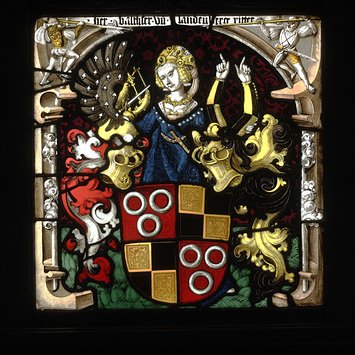
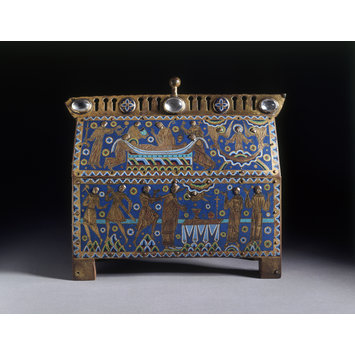
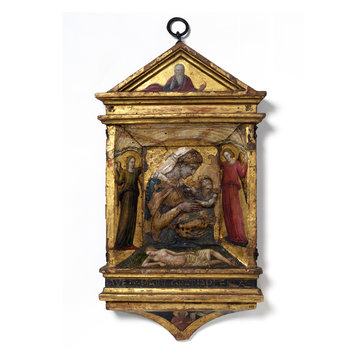
[Images: Top - Leonardo Da Vinci, "Volume II, Forster Codex" (ca. 1495) | Bottom, left to right - "The Becket Casket" (ca. 1180-1190). Donatello, "Virgin and Child" (ca. 1435-1440). "Arms of Balthasar II von Hohenlandenberg" (ca. 1500). Courtesy V&A Museum.]

Share/Save/Bookmark

11/14/2009

Top ART News: Week In Review | Nov. 8 - Nov. 15

■ Visiting the Louvre - There's an App for That! | PARIS (11/08/09) — Not only is there an App for just about everything, there's just about everything in the Louvre museum Carrousel shopping center. Thus, on Saturday, Apple opened its first retail store in France (the 277th in ten countries), underneath the Tuileries garden and great glass pyramid in the Louvre... More >

■ Oxford's Ashmolean Museum Reopens After 10 Months and $100 Million | OXFORD, ENGLAND (11/08/09) — After 10-months and an almost $100 million renovation, Oxford's Ashmolean Museum of Art and Archaeology reopened to the public on Saturday. The world's first university museum, the Ashmolean has added 39 new galleries, including four temporary exhibition galleries, a new education center and state-of-the art conservation studios... More >

■ MoMA Designs a Bauhaus Retrospective | NEW YORK, NY (11/09/09) — From architecture, industrial design, textiles and furniture, to graphics, painting and sculpture, the 20th century art movement known as the Bauhaus continues to influence our modern world (all one has to do browse the latest IKEA catalog for examples). In its first major exhibition dedicated to the Bauhaus since 1938, the Museum of Modern Art is celebrating the extraordinary artists, architects and designers of the avant-garde school... More >

■ Extreme Makeover: King Tut's Tomb Edition | CAIRO (11/10/09) — Disturbing brown spots are forming on the walls in the famous tomb of Egypt's most popular pharaoh, King Tutankhamen (better known as King Tut). The Supreme Council of Antiquities (SCA) and the Getty Conservation Institute (GCI) are embarking on a new preservation project aimed at assessing the damage. On Tuesday, the two entities announced a new 5-year partnership in which they will work together to analyze and conserve the ancient burial site... More >

■ Bidding War Over '200 One Dollar Bills' Ends at $43.76 Million | NEW YORK, NY (11/11/09) — The art market may still be suffering, but a successful contemporary art auction on Wednesday night indicates a rebound is  on the horizon. A surprise bidding war between five potential buyers broke out when Sotheby's brought Andy Warhol's 200 One Dollar Bills (1962) up to the auction block... More >

■ Ciao MAXXI! Contemporary Art Museum Opens in Italy | ROME, ITALY (11/13/09) — The vision most of us see when we think of a museum in Italy is a Renaissance or Baroque-style palace or cathedral, a Medici-commissioned structure, with classical columns, frescoes on the ceiling and gilding as far as the eye can see. The National Museum of the XXI Century Arts (or MAXXI for short) opening Saturday in Rome hopes to change that perception... More >

■ Munch Art Heist Was Well-Planned, Oslo Police Say | OSLO, NORWAY(11/13/09)  — Perhaps it's the miserable, tortuous scenes in the artwork of Edvard Munch that makes it attractive to the criminal element. The Symbolist painter's most famous agony-laden image, The Scream, was stolen on the same day as the opening ceremony of the 1994 Lillehammer Winter Olympics. In 2004, another version of The Scream and the Madonna were both taken from Oslo's Munch Museum. And on Thursday, a man smashed the window of the Nyborg Kunst art gallery in Oslo and snatched Edvard Munch's Historien... More >

■ Mona Lisa's Eyebrows Were Tweezed and 24 Other Startling Revelations | MANCHESTER, ENGLAND (11/14/09) — What's behind Mona Lisa's mysterious gaze? Art historians and scholars have been trying to answer that question for centuries. No one will ever know for sure, but scientists have discovered answers to other questions about Leonardo da Vinci's famous gal. Da Vinci - The Genius, a new exhibit at the Manchester Museum of Science and Industry (MOSI), presents a comprehensive exploration behind the genius of the Italian Renaissance master... More >

■ Manolo Blahniks Under $70? Only at the RCA Secret Sale! | LONDON (11/14/09) — Pssst... the Royal College of Art has a secret. It's selling artwork by some of the world's most renowned artists for just under $70. And if you register in time, you can get in on this exclusive sale. Now in it's 16th year, RCA Secret is an annual contemporary art exhibition and sale which offers original postcard-sized artworks, made and donated by professional artists, designers, illustrators and postgraduate art students... More >
=================

Share/Save/Bookmark

Mona Lisa's Eyebrows Were Tweezed and 24 Other Startling Revelations

Marcel Ducamp, L.H.O.O.Q., Leonardo da Vinci, Mona Lisa
MANCHESTER, ENGLAND — What's behind Mona Lisa's mysterious gaze? Art historians and scholars have been trying to answer that question for centuries. No one will ever know for sure, but scientists have discovered answers to other questions about Leonardo da Vinci's famous gal. Da Vinci - The Genius, a new exhibit at the Manchester Museum of Science and Industry (MOSI), presents a comprehensive exploration behind the genius of the Italian Renaissance master.

Opening Saturday, Da Vinci - The Genius offers over 200 objects, including large scale interactive reproductions of Leonardo's machines, a presentation about the life and times of the artist, 3-D animations of his famous Vitruvian Man, The Last Supper, and Mona Lisa.

A special section of the exhibit, The Secrets of Mona Lisa, presents the findings of Pascal Cott, a French scientific engineer and fine art photographer who was granted unprecedented access to the iconic painting. Under strict security and supervision,  Cott was able to examine the painting in the Louvre Museum, outside of the protective glass enclosure, even removed from the frame. He used a 240-million pixel camera which allowed him to see through the top paint surface to the layers below. Cott claims the Mona Lisa looked "totally different" when it was originally painted 500 years ago.

Twenty-five of the scientist's discoveries are revealed in the museum's new exhibit, some of which are:
  • Mona Lisa's smile, glance and face were all wider;
  • Her skin was not as yellow;
  • The sky was not brownish-yellow, but blue;
  • She was holding a blanket in her right hand;
  • One of her left fingers was never completely finished;
  • And most startling...Mona Lisa had eyebrows, eyelashes, and probably even a mustache!
Somewhere in the world Marcel Duchamp's L.H.O.O.Q. is smiling.

_______________
Da Vinci - The Genius (Nov. 14, 2009 - June 13, 2010)
Museum of Science and Industry, UK | Website
=================
[Photo: Marcel Duchamp. L.H.O.O.Q. (detail), 1919.]

Share/Save/Bookmark

10/29/2009

Attention Mall Shoppers: World's Largest Mona Lisa On View

Mona Lisa, Leonardo da Vinci

WREXHAM, WALES -- Mall shoppers in Wales were certainly treated to something better than a sweet snack at the food court on Wednesday. The world's largest reproduction of the famed Mona Lisa was revealed at the Eagles Meadow shopping center in Wrexham.

“It’s mind-blowing, but the smile is still as enigmatic as ever. It took over a week to do her face — everybody knows what it looks like so we had to make sure it was exactly right," said artist Katy Webster, who was in charge of the project. Here are some more impressive stats: the project required 245 people, working for 987 hours, using 23 gallons of paint on 82 different vinyl squares, to create a work of art that measures 2,583 square feet.

Unlike visiting Leonardo da Vinci's original fine art masterpiece in Paris' Louvre Museum, shopper-spectators are not charged an entry fee, there is no neck craning or eye straining necessary, and visitors can touch the masterpiece without fear of tripping any alarms.

Members from the entire community contributed to the construction, including school children from Victoria Primary School and members of the Haulfan Centre for people with disabilities. Folks can purchase a little piece of the record-breaking artwork by donating money to Hope House, a local charity that provides for terminally ill children.

=================

Share/Save/Bookmark

10/13/2009

19K Portrait Is a Leonardo da Vinci Worth Millions, Fingerprints Show

Alessandro Vezzosi, Museo Ideale Leonardo Da Vinci, AP
In 1998, Christie's art auction house sold a $19,000 drawing to New York dealer Kate Ganz. Catalogued simply as “German, early 19th century,” Young Girl in Profile in Renaissance Dress, (a 13x9" portrait, in chalk, pen and ink on vellum, mounted on an oak board), was purchased by Canadian-born Peter Silverman in 2007. Silverman decided to do some sleuthing into the provenance of his newly-collected, unattributed work of art. His curiosity just may have paid off.
LONDON /TimesOnline/ -- The ghost of a fingerprint in the top left corner of an obscure portrait appears to have confirmed one of the most extraordinary art discoveries. A growing number of leading art experts agree that it is almost certainly by Leonardo da Vinci and worth about £100 million.

Carbon dating and infra-red analysis of the artist’s technique are consistent with such a conclusion, but the most compelling evidence is that fragment of a fingerprint. Peter Paul Biro, a Montreal-based forensic art expert, found it while examining images captured by the revolutionary multispectral camera from the Lumière Technology company.

The fingerprint corresponds to the tip of the index or middle finger, and is “highly comparable” to one on Leonardo’s St. Jerome in the Vatican. Importantly, St. Jerome is an early work from a time when Leonardo was not known to have employed assistants, making it likely that it is his fingerprint.
Martin Kemp, Emeritus Professor of History of Art at the University of Oxford, is convinced and recently completed a book about the find (as yet unpublished). He said that his first reaction was that “it sounded too good to be true — after 40 years in the business, I thought I’d seen it all”. But gradually, “all the bits fell into place.”
If it is by Leonardo, it would be the only known work by the artist on vellum although Professor Kemp points out that Leonardo asked the French court painter Jean Perréal about the technique of using coloured chalks on vellum in 1494.

=================
[Read More -  Unrecognized Leonardo da Vinci Portrait Revealed By His Fingerprint | TimesOnline]
Share/Save/Bookmark

Related Posts with Thumbnails